
EP 67: Why Traditional Medicine Struggles With Chronic Health (part 2)

“Health improvement isn’t an event. It’s a process you have to show up for.

Vince Pitstick

Most people don’t struggle with health because they don’t care. They struggle because of how they’ve been taught to think about their body.

In traditional medicine, health is treated as episodic. You feel bad, you go to the doctor, you get diagnosed, and you’re prescribed something. The visit ends, and you wait to see what happens.

But when it comes to long-term or chronic health challenges, that approach often doesn’t work. Not because doctors don’t care. Not because medications don’t have a place. But because the reasoning model itself is flawed for complex systems like the human body.

This episode breaks down why that is—and what changes when health is approached as a process instead of a series of isolated events.


The Episodic Model of Health Care

Traditional Western medicine is built around episodes.

An episode looks like this:

  • You don’t feel well
  • A symptom is identified
  • A diagnosis is given
  • A prescription follows
  • Time passes
  • Results are evaluated

This model works well in acute situations. If someone is dealing with a medical emergency, fast assumptions and immediate interventions are necessary.

But chronic health issues don’t behave like emergencies.

They develop over time. They involve multiple variables. And they rarely have a single cause.

Yet many people are conditioned to think about their health the same way the system does—one symptom, one solution at a time.


The Core Problem: How Health Problems Are Solved

The transcript identifies the real issue clearly: the way problems are solved.

Western medicine primarily uses inductive reasoning when addressing health concerns.

Inductive reasoning works like this:

  • Identify a problem
  • Create a theory about the cause
  • Apply a solution
  • Wait to see if the theory was correct

For example:

  • Someone doesn’t feel well
  • High blood pressure is identified
  • High blood pressure becomes the diagnosis
  • A medication is prescribed
  • The system waits to see if numbers improve

Sometimes the numbers do improve. But often, new issues appear. Different symptoms arise. More medications are introduced.

The original problem may not actually be solved—it’s just managed.


Why Inductive Reasoning Breaks Down in Health

Inductive reasoning has limitations, especially when applied to complex systems.

The human body is not a single-variable system. It’s influenced by:

  • Nutrition
  • Stress
  • Lifestyle
  • Activity levels
  • Supplements
  • Genetics (when considered)
  • Other measurable factors

When only one variable is addressed at a time, the system stays unbalanced.

This is why many people experience a cycle of:

  • Temporary improvement
  • New symptoms
  • Additional interventions
  • Ongoing confusion

They’ve been trained to think this way—not because it’s effective long term, but because it’s familiar.


Acute Care vs. Chronic Health

The transcript makes an important distinction.

Inductive reasoning does have a place.

In emergency situations, decisions must be made quickly. If someone comes in with a life-threatening injury, assumptions must be made and action must be taken immediately.

But chronic health is different.

Chronic health problems are complex systems problems. And complex systems require a deductive approach.


What Deductive Reasoning Looks Like in Health

Deductive reasoning flips the model.

Instead of focusing on a single symptom, it asks:

  • What variables are influencing how this person feels?
  • How do those variables interact?
  • What happens when they are addressed together?

This approach evaluates:

  • Nutrient intake
  • Stress levels
  • Lifestyle habits
  • Activity
  • Supplements
  • Other relevant health markers

All of these variables are considered together, not in isolation.

They are tested as part of a process, not as disconnected solutions.

This is the fundamental difference between managing health and improving it.


Why People Feel Overwhelmed by Lifestyle Medicine

Many people say they want something different from traditional care.

But when they encounter a process that addresses multiple variables at once, they feel overwhelmed.

The transcript explains why:

  • They want change
  • But they don’t understand what “different” actually means
  • They haven’t been taught how to think deductively about their body

Without understanding the reasoning behind the process, people struggle to follow it—even if it works.


Why Information Alone Isn’t Enough

Another key insight from the transcript is that information doesn’t create change by itself.

People hear information all the time. But without trust and relationship, there’s no reason to apply it.

That’s why coaching and relationship-based care matter.

When people trust the process—and the person guiding them—they’re more willing to:

  • Stay consistent
  • Follow through
  • Try something even before fully understanding it

Health improvement often doesn’t make sense until it’s experienced.


The Role of Coaching in Long-Term Health

The transcript emphasizes that coaching plays a central role in the future of health.

Coaches:

  • Help people understand why they’re doing what they’re doing
  • Support consistency
  • Observe real-world behavior
  • Bridge communication between patients and medical teams

Doctors can’t manage all of these relationships alone. Coaching allows:

  • Better follow-through
  • Better communication
  • Better long-term outcomes

This isn’t about replacing doctors. It’s about allowing each role to function where it’s most effective.


Why Showing Up Is the Non-Negotiable Variable

One of the strongest points in the episode is this:

There is a 100% success rate when people show up.

The process works when people:

  • Participate
  • Stay engaged
  • Follow through over time

Health improvement isn’t a one-time decision. It’s an organized process that requires presence and consistency.

Just like a plane needs enough thrust to take off, health improvement requires enough engagement for the system to change.


Health as a Process, Not an Event

The traditional model treats health as a series of visits.

The approach described in the transcript treats health as a guided process.

A process:

  • Accounts for complexity
  • Adjusts over time
  • Relies on relationship
  • Requires participation

This shift—from episodic thinking to systems thinking—is what creates sustainable change.


Final Thought: Why This Way of Thinking Matters

Change won’t come from the top down.

It comes from individuals helping individuals.
From relationship.
From guidance.
From people willing to step forward and support others through a process they may not yet understand.

Health improves when people are brought to clarity, coached through uncertainty, and supported consistently.

That’s the difference between managing symptoms and changing lives.


👉 Watch the full episode here: https://youtu.be/Qfw3E52COAg

Read Part 1 here: https://nassauhealthfood.com/ep66-flush-feed-fast-fuel-why-order-matters-in-functional-health-part1/

🌿 Nassau Health Foods is your local organic and wellness partner.
Shop online anytime: https://nassauhealthfood.com/
Or visit us at 833 T.J. Courson Rd., Fernandina Beach, FL 32034

Transcript Evidence
All concepts, explanations, metaphors, distinctions, and language used in this article are drawn directly from EP 67 Transcript with no additional interpretation, examples, statistics, or frameworks added.
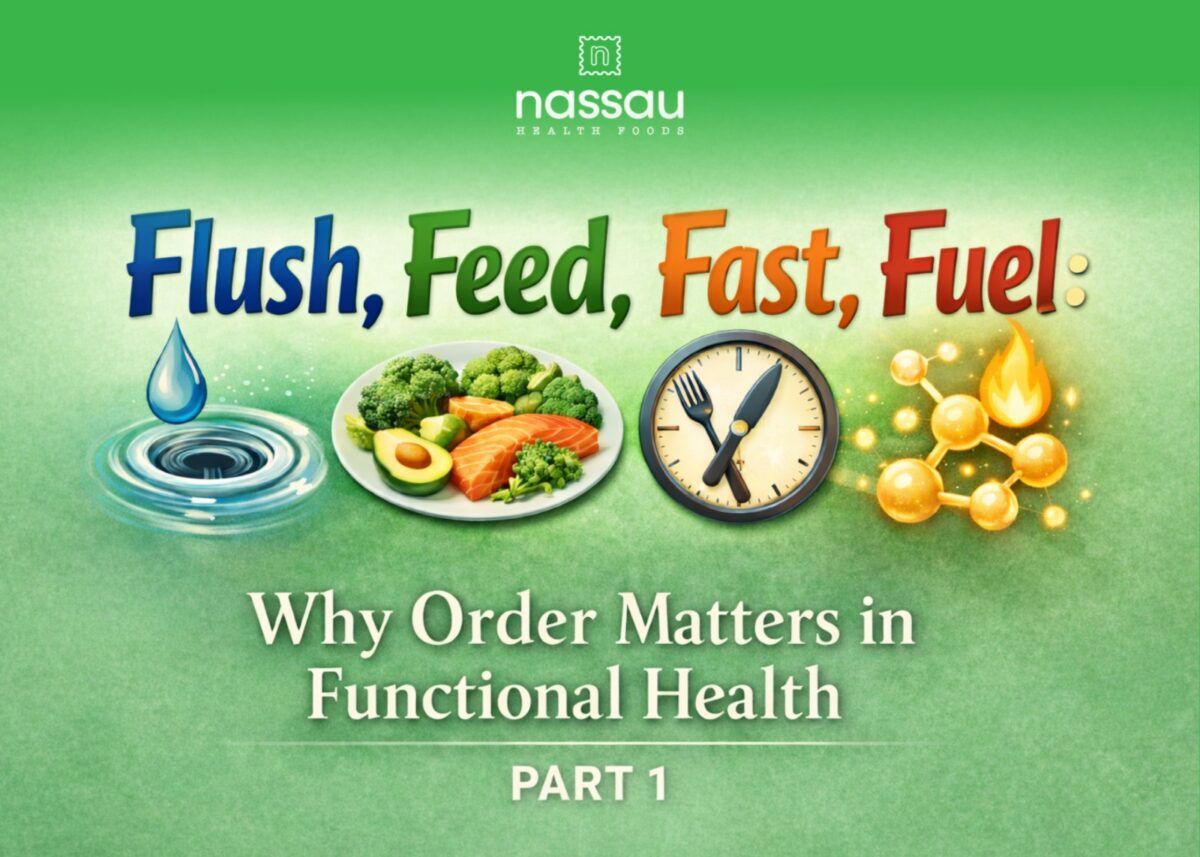
EP 66: Flush, Feed, Fast, Fuel: Why Order Matters in Functional Health (Part 1)

The body is a complex system, and order matters.”

Vince Pitstick

One of the most frustrating experiences in health is doing “all the right things” and still not seeing results.

You clean up your diet.
You try supplements.
You work on stress.
You focus on gut health.

And yet—progress stalls.

In this episode of the Nassau Health Food Store Organic Living Podcast, Steve Adams sits down with functional health expert Vince Pitstick to explore why this happens so often. The issue, they explain, is rarely effort or intention.

More often, it’s order.This conversation introduces Part 1 of the Flush, Feed, Fast, Fuel process, also known as the Four F system—a structured approach to functional health that prioritizes sequence over scattered protocols.


The Body Is a Complex System—Not a Collection of Symptoms

One of the central themes of this episode is that the human body operates as a complex, interconnected system.

When health is approached in isolated pieces—sleep here, gut there, supplements somewhere else—people become overwhelmed. And overwhelmed people tend to quit.

As Steve reflects on his own health journey, he notes how easy it is to forget what it feels like to be a beginner. There are simply too many variables at play:

  • Sleep
  • Stress
  • Nutrition
  • Fasting
  • Movement
  • Emotional health

Without guidance, most people struggle to know where to start—and how to keep going.

Vince emphasizes that coaching is what makes functional medicine truly functional. Having someone walk with you week by week, helping you adjust and adapt, leads to dramatically different outcomes than occasional practitioner visits spaced months apart.


Mental and Emotional Health Often Comes First—Not Last

A powerful insight from this episode is the reminder that many health issues begin mentally and emotionally.

Vince shares from his own experience growing up on a farm and being exposed to environmental and emotional stressors early in life. At the time, his symptoms were labeled as behavioral or psychological, without understanding the deeper physical drivers underneath.

He cautions against assuming that anxiety, intrusive thoughts, or mood challenges are always the root problem.

Often, they are signals.

According to Vince, the nervous system communicates distress through the mind first. When the body has been under chronic stress—chemical, emotional, or metabolic—those signals appear as anxiety, fear patterns, or mood shifts.

This matters because when stress and anxiety become chronic, they activate the sympathetic nervous system. Over time, that constant activation contributes to disease processes throughout the body.


Introducing the Four F Process

The Four F system provides a methodical sequence for addressing health challenges without chasing symptoms.

The four phases are:

  1. Flush
  2. Feed
  3. Fast
  4. Fuel

This episode focuses primarily on why the process begins with Flush and why skipping or rearranging steps often leads to poor results—even when the tools themselves are good.

Vince stresses that the success of this approach is not just about knowledge or protocols, but about organization.


Phase One: Flush — Resetting the System

The first phase, Flush, is about preparing the body to heal.

Rather than starting aggressively with gut protocols or supplements, this phase focuses on:

  • Calming the nervous system
  • Opening lymphatic pathways
  • Supporting liver and gallbladder function
  • Lightly clearing the gastrointestinal tract
  • Stimulating the endocrine system

The goal is to remove friction points so the body can do what it was designed to do.

Vince explains that when these systems are supported early on, a significant portion of anxiety often resolves within weeks. As healing continues, more symptoms fade—leaving behind only what may truly need deeper emotional or genetic work.


Why Starting With the Gut Isn’t Always Step One

Many people begin their health journey by focusing immediately on gut health. Vince acknowledges that this can be effective, but explains why his methodology takes a different approach.

Before going “heavy” on the gut, the Four F process emphasizes:

  • Opening lymphatic flow
  • Calming immune activation
  • Reducing nervous system stress

When gut work does begin in Phase Two, it’s approached with the understanding that the gut is not just about digestion—it’s about the immune system.

Vince notes that approximately 80% of the immune system resides in the gut, which means gut health impacts every system in the body. Shoulder pain, anxiety, infertility, and other seemingly unrelated issues can all be influenced through immune and gut pathways.


Metabolism: The Foundation of Health

A central claim in this episode is that all disease is metabolic.

Vince defines metabolism broadly—not just as calorie burning, but as the body’s ability to:

  • Produce energy
  • Break down substances
  • Process emotions
  • Clear toxins
  • Regulate hormones
  • Manage glucose

When metabolism slows or encounters resistance, things begin to accumulate. Over time, this buildup shows up as elevated blood sugar, inflammation, toxin retention, or hormonal imbalance.The goal of the Four F process is to increase metabolic speed and efficiency, allowing the body to process inputs smoothly rather than storing or reacting to them.


Endocrine Function and Cellular Communication

As part of restoring metabolic flow, the process supports the endocrine system, including:

  • Thyroid
  • Adrenals
  • Ovaries or testes

Vince explains that every cell in the body interacts with thyroid hormone signaling. When these signals improve, cells begin to function more efficiently.

This phase involves:

  • Supporting adrenal and thyroid function
  • Encouraging cellular movement and energy flow
  • Continuing lymphatic and liver support

The intention is not force—but alignment.


From Gut to Blood to Cell

The episode walks listeners through a simple but powerful sequence:

  • Food enters the gut
  • Nutrients move into the bloodstream
  • Nutrients must enter the cell

Once nutrients reach the bloodstream, the focus shifts to:

  • Insulin sensitivity
  • Blood sugar regulation
  • Hormonal signaling (including leptin and ghrelin)
  • Cellular inflammation

This is where fasting strategies begin to play a role—supporting metabolic flexibility, clearing damaged cells, and improving mitochondrial function.


Why Sequence Beats “Perfect Protocols”

To illustrate the importance of order, Vince uses the analogy of a lawn.

You can buy the best seed in the world—but without irrigation, proper timing, and consistent care, the lawn won’t thrive.

The same is true for health.

You can have the right supplements, the right diet, and the right activity—but without proper sequencing, the body never reaches stability.

The Four F process offers a repeatable structure that works even before lab testing is introduced. Vince shares that thousands of people have gone through this process with high success rates using lifestyle changes alone.


A Simpler, More Sustainable Path Forward

This episode does not promote quick fixes or miracle solutions. Instead, it emphasizes:

  • Structure over overwhelm
  • Process over perfection
  • Guidance over guesswork

By approaching the body as an organized system—and respecting the order in which it heals—people experience more consistent, lasting outcomes.


Watch the Full Episode

This blog covers Part 1 of a deeper conversation on Flush, Feed, Fast, Fuel. To hear the full discussion, context, and nuance:

👉 Watch the full episode here: https://youtu.be/YhNcfSHGLLU

🌿 Nassau Health Foods is your local organic and wellness partner.
Shop online anytime: https://nassauhealthfood.com/
Or visit us at 833 T.J. Courson Rd., Fernandina Beach, FL 32034

Transcript Evidence
The following concepts and statements are drawn directly from the episode transcript:
Coaching improves outcomes through consistent guidance (00:03–00:04)
Mental and emotional stress often precedes physical disease (00:05–00:06)
Chronic stress activates the sympathetic nervous system and contributes to disease (00:07)
Phase One focuses on flushing, nervous system calming, lymphatic and endocrine support (00:07–00:08)
Gut health is tied to immune function throughout the body (00:08–00:09)
Health is fundamentally metabolic in nature (00:11)
Endocrine signaling influences every cell (00:12)
Order and organization determine outcomes more than isolated protocols (00:09–00:10)

Your map to healthy eating.

Conveniently located near the beach and downtown.

Mon-Fri: 8am – 7pm

Sat: 8am – 6pm

Sun: 10am – 4pm

Tel: (904) 277-3141

Mon-Fri: 11am – 3pm

Closed on Saturday & Sunday

Tel: (904) 277-3141

Order Online

Mon-Fri: 8am-11am

Closed on Saturday & Sunday

Get Directions