
EP 71: PFAS and Microplastics: What They Are, Why They Matter, and Simple Ways to Reduce Exposure



“We don’t need to panic, but it does make good sense to reduce our exposure everywhere we can.“
— Dr. Daniel Kessler
Environmental health topics like PFAS and microplastics are appearing in the news more frequently. For many people, these terms can sound complicated or even alarming.
In this episode, Dr. Daniel Kessler, a board-certified family medicine physician trained at Mayo Clinic who also worked at the Centers for Disease Control’s National Center for Environmental Health, discusses these issues and explains them in clear, practical terms.
The goal of the conversation is not to create fear. Instead, the focus is on helping people understand what these environmental exposures are, why they matter, and what simple steps can help reduce exposure.
The discussion focuses on four environmental topics that people are hearing about more often:
- PFAS
- Microplastics
- Mold
- Heavy metals
The episode primarily explores PFAS and microplastics and provides practical guidance for people who want to better understand these environmental concerns.
What Are PFAS?
PFAS stands for per- and poly-fluoroalkyl substances. These are man-made chemicals that were designed to resist water, oil, and heat.
They have been used since the 1940s in many everyday products.
Because of their chemical structure, PFAS do not easily break down in the environment. For this reason, they are often referred to as “forever chemicals.”
Where PFAS Are Commonly Found
PFAS have historically been used in a wide range of products designed to resist water, stains, or heat.
Examples mentioned in the episode include:
- Non-stick cookware
- Stain-resistant fabrics
- Water-resistant jackets
- Fast food wrappers and takeout containers
- Some cosmetics
- Dental floss
Because these chemicals were widely used in manufacturing, they have become very common in the environment.
Why PFAS Are Called “Forever Chemicals”
PFAS earned the nickname “forever chemicals” because they do not easily break down in nature.
Once released into the environment, they can persist in:
- Soil
- Water
- The human body
Studies have detected PFAS in the blood of the vast majority of Americans who have been tested.
However, the presence of PFAS in the body does not automatically mean someone will become ill. The key takeaway is that PFAS exposure is something worth understanding and paying attention to.
Health Concerns Researchers Are Studying
Scientists continue to study how PFAS may affect human health.
Research mentioned in the episode has examined potential associations with:
- Cholesterol levels
- Thyroid function
- Immune response, especially in children
- Certain cancers
The science around PFAS is still evolving, and researchers continue to learn more each year.
Government agencies are also taking action.
For example, the Environmental Protection Agency (EPA) has begun setting guidelines related to PFAS levels in drinking water.
Practical Steps to Reduce PFAS Exposure
While PFAS are widespread, the episode emphasizes that there are practical steps individuals can take to reduce exposure.
1. Filter Your Drinking Water
One of the most important actions discussed is filtering drinking water.
Water filtration systems can help reduce PFAS exposure.
Filters mentioned in the episode include:
- Reverse osmosis systems
- Certain activated carbon filters
Consumers can look for filters that are NSF certified to reduce PFAS.
Even relatively simple solutions such as countertop or under-sink filters may make a meaningful difference.
2. Reduce Non-Stick and Stain-Resistant Products
Another approach is gradually reducing certain household products that may contain PFAS.
This does not require replacing everything immediately. Instead, changes can be made over time as products wear out.
Examples discussed include:
- Replacing non-stick cookware
- Choosing alternatives such as cast iron, stainless steel, or ceramic
- Looking for PFAS-free furniture or carpeting
- Avoiding optional stain-resistant treatments
Small changes made over time can add up.
What Are Microplastics?
Microplastics are another environmental topic that has received growing attention.
As the name suggests, microplastics are extremely small pieces of plastic, often less than five millimeters in size.
Some microplastic particles are so small that they are microscopic.
Where Microplastics Come From
Microplastics can originate from several sources.
Examples discussed in the episode include:
- The breakdown of plastic bottles and bags
- Synthetic clothing fibers that shed during washing
- Car tires wearing down on roads
- Plastic packaging materials
These tiny particles can eventually enter the environment.
As a result, microplastics have been detected in:
- Water
- Food
- Air
Microplastics Detected in the Human Body
Research has also detected microplastics in the human body.
Examples mentioned in the discussion include:
- Blood
- Lung tissue
- Placenta
- Arteries
One study referenced in the episode reported microplastics found in the carotid arteries, which are the arteries located in the neck.
Researchers observed that these particles may contribute to inflammation within the arteries, which could potentially play a role in cardiovascular problems such as stroke or cardiovascular disease.
What Scientists Still Do Not Know
Despite growing attention to microplastics, research in this area is still developing.
Scientists know that microplastics can be present in the body, but the full health implications are still being studied.
Early research suggests potential concerns related to:
- Inflammation
- Cellular stress
However, researchers are continuing to study how these particles affect long-term health.
This process is a normal part of scientific progress.
Scientists observe, study, and adjust recommendations as more information becomes available.
Reducing Microplastic Exposure
Even though the research is still evolving, the episode emphasizes that reducing exposure where possible is a reasonable approach.
1. Rethink Plastic Use With Food and Drinks
One of the simplest changes involves how plastic is used around food.
Examples discussed include:
- Avoid microwaving food in plastic containers
- Avoid heating plastic wrap with food
- Use glass containers for food storage
- Use stainless steel or glass water bottles
Heat can cause plastics to break down and release particles into food.
Making these changes can help reduce daily microplastic intake.
2. Use Water Filters That Capture Microplastics
Water filtration may also help reduce microplastic exposure.
Examples mentioned include:
- Reverse osmosis filters
- Solid carbon block filters
These filtration systems may capture microplastic particles in addition to reducing PFAS exposure.
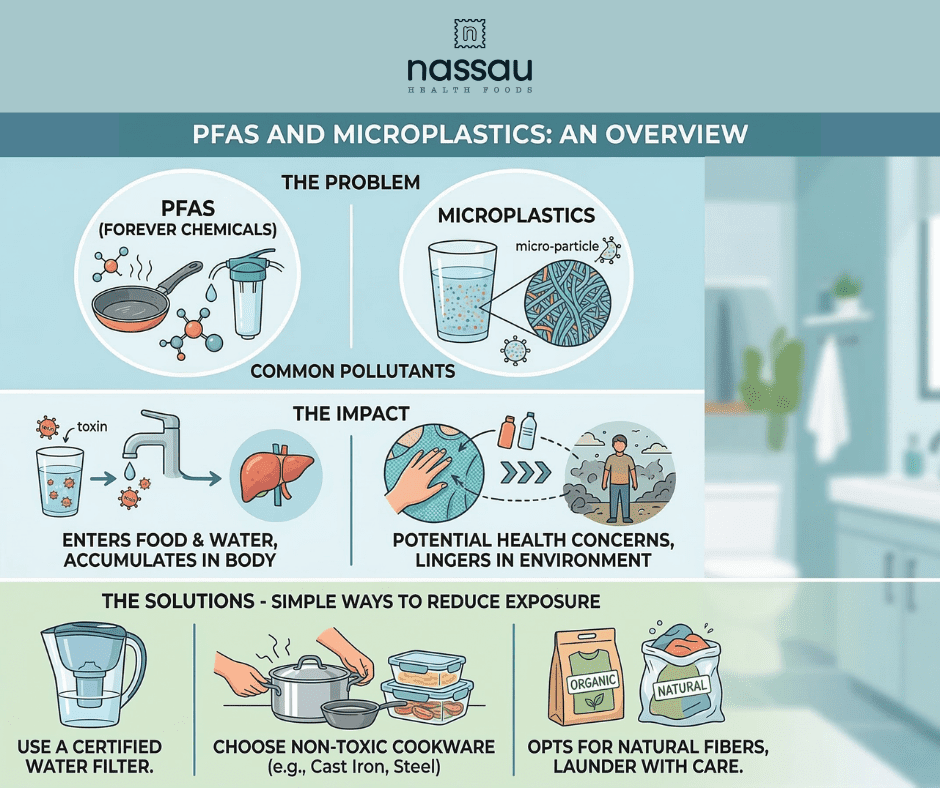
This means a single filtration system can address multiple environmental exposures.
Awareness Without Panic
A central theme of the episode is balance.
Environmental exposures exist in modern life, and many people encounter them daily.
However, the goal is not to panic.
Instead, the focus is on becoming informed and making reasonable changes that may reduce exposure over time.
Examples discussed throughout the conversation show that small steps can be practical and achievable.
Why Environmental Awareness Matters
Understanding environmental exposures can help people make more informed choices.
Even simple lifestyle adjustments may contribute to overall health.
These adjustments may include:
- Filtering drinking water
- Reducing certain plastic uses
- Gradually replacing certain household products
The key message is empowerment through information.
Final Thoughts
PFAS and microplastics are environmental topics that are receiving increasing attention from scientists, public health organizations, and the media.
Although research continues to evolve, understanding these exposures and making simple adjustments can help individuals feel more informed about their environment.
Dr. Kessler’s perspective highlights a balanced approach:
Learn about these issues, avoid unnecessary fear, and focus on practical steps that can help reduce exposure.
👉 Watch the full episode here: https://youtu.be/ehxaYte7lEo
Read Series 1/4 here: https://nassauhealthfood.com/ep70-living-toxin-free-without-turning-your-life-upside-down/
🌿 Nassau Health Foods is your local organic and wellness partner.
Shop online anytime: https://nassauhealthfood.com/
Or visit us at 833 T.J. Courson Rd., Fernandina Beach, FL 32034
Transcript Evidence
The article above is based exclusively on statements from the episode transcript, including:
– PFAS are man-made chemicals used since the 1940s designed to resist water, oil, and heat.
– PFAS are often called “forever chemicals” because they persist in the environment and the human body.
– PFAS are found in products such as non-stick cookware, stain-resistant fabrics, water-resistant jackets, food packaging, cosmetics, and dental floss.
– Studies have detected PFAS in the blood of the majority of Americans tested.
– Microplastics are small plastic particles that come from the breakdown of larger plastics, synthetic clothing fibers, car tires, and packaging materials.
– Research has detected microplastics in blood, lung tissue, placenta, and arteries.
– Reverse osmosis and certain carbon filters may help reduce PFAS and microplastics in drinking water.