EP 64: How Toxins Quietly Shorten Your Health Span
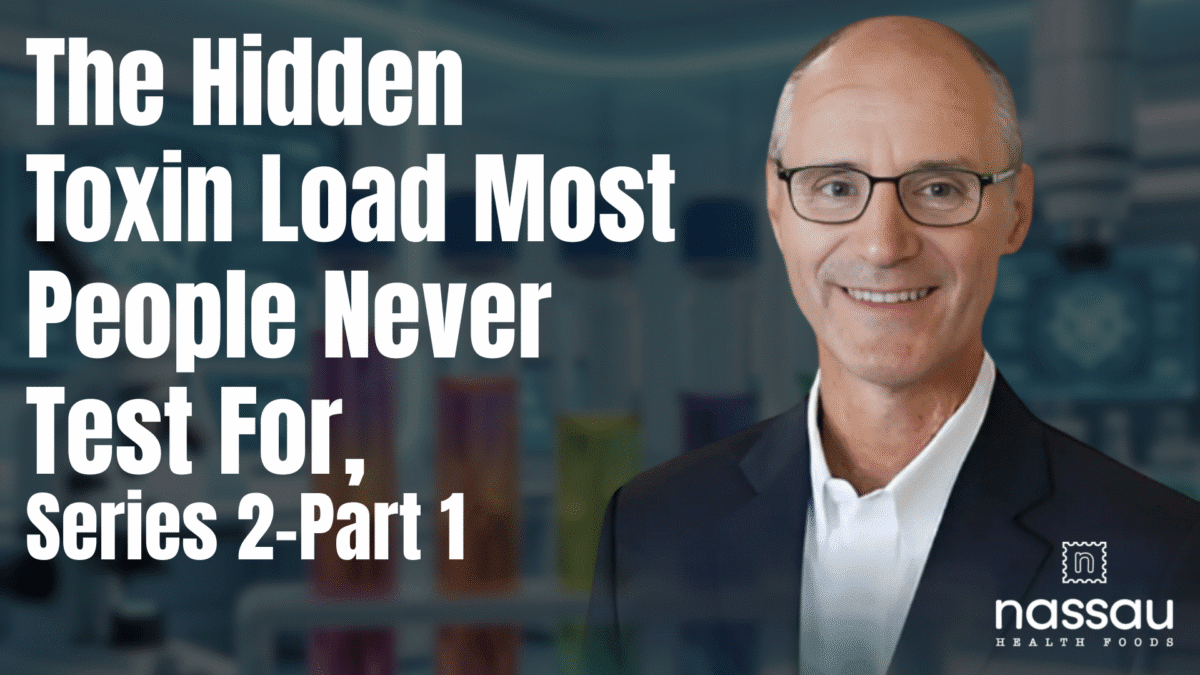


“Everyone carries some level of toxins—
regardless of age.”
— Dr. Daniel Kessler
Most people associate toxins with something obvious—an illness, a reaction, or an emergency. But according to Dr. Daniel Kessler, that assumption is exactly what causes many people to miss the bigger picture.
In this episode of the Organic Living Secrets podcast, Steve Adams sits down with Dr. Kessler to explore how toxins can quietly shorten your health span—the years you live in good health—even when blood work appears normal and symptoms are minimal.
This is not a fear-based discussion. It is a grounded, practical conversation about awareness, everyday exposure, and the small choices that can meaningfully influence long-term health.
What Is Health Span—and Why It’s Different From Life Span
Life span refers to how long you live.
Health span refers to how long you live well.
Dr. Kessler explains that many people feel reassured when routine labs come back normal. But that reassurance can be misleading. A person may technically be “alive and functioning” while slowly accumulating internal stressors that reduce vitality over time.
The problem, he notes, is that people often wait for something bad to happen before they start asking deeper questions:
- Why didn’t I know sooner?
- Could this have been prevented?
- Was there something I could have done differently?
This gap—between feeling okay and actually being healthy—is where health span quietly erodes.
Dr. Kessler’s Background in Environmental Health
Before becoming a practicing physician, Dr. Kessler worked at the Centers for Disease Control, specifically at the National Center for Environmental Health.
His role involved analyzing blood and serum samples from people across:
- All age groups, from infants to the elderly
- Populations across the United States
- Samples from around the world
What he found was consistent and striking:
Every individual—regardless of age—had some level of toxins present in their body.
This exposure was not limited to people who were sick. It was universal.
Why Toxins Are Often a “Hidden Load”
Dr. Kessler refers to toxin accumulation as a hidden load—something the body adapts to over time without producing immediate symptoms.
The human body is resilient. It can compensate for stressors for years. But that adaptation comes at a cost.
Many patients, he explains, experience symptoms such as:
- Not feeling well
- Low energy
- Ongoing discomfort without clear diagnosis
Yet standard blood work often appears mostly normal.
That disconnect is what leads to frustration—for both patients and doctors.
Acute Care vs. Chronic Exposure
Modern healthcare excels at acute intervention.
If someone has:
- A heart attack
- A severe infection
- A sudden medical emergency
The system responds quickly and effectively.
However, Dr. Kessler points out that chronic, low-level exposure to toxins does not trigger alarms. These exposures:
- Do not cause immediate harm
- Build slowly over years or decades
- Often go unaddressed
This is why many people feel something is “off” without being able to pinpoint why.
Types of Toxins Discussed in the Episode
Dr. Kessler explains that the word toxin can be misleading and overly broad. He breaks it down into categories discussed in the conversation:
1. Infectious Toxins
These are produced during infections such as:
- Flu
- Viral illnesses
- Food poisoning
They often cause noticeable symptoms and resolve once the infection clears.
2. Man-Made and Environmental Exposures
These include synthetic chemicals that:
- Did not exist a century ago
- Are encountered daily
- Accumulate slowly
Dr. Kessler notes that the body may encounter thousands of these chemicals over time.
Most exposures do not cause immediate illness—but chronic exposure can quietly contribute to:
- Inflammation
- Hormone disruption
- Reduced health span
Why Feeling “Fine” Can Be Misleading
One of the most important ideas in the episode is this:
Feeling okay does not always mean you are as healthy as you think.
Dr. Kessler emphasizes that many people delay action because nothing feels urgent. They wait for pain, diagnosis, or crisis before making changes.
By the time something shows up clearly, the underlying issues may have been developing for years.

The Kitchen as a Major Exposure Zone
When discussing practical changes, Dr. Kessler starts where people spend a large portion of their time: the kitchen.
Food as a Major Influence
Food matters—not just nutritionally, but chemically.
Dr. Kessler describes food as one of the most impactful daily exposures and notes that sugar is widely recognized as a major contributor to health issues.
He also references recent changes to the food pyramid, emphasizing shifts toward:
- Less grains
- More healthy fats
- More healthy proteins
(Specific details beyond this were not expanded further in the transcript.)
Cookware and Chemical Exposure
Cookware is another overlooked source of exposure.
Dr. Kessler discusses concerns around:
- Non-stick cookware
- Overheating or scratching surfaces
- Release of certain chemicals when damaged
He mentions PFAS—often referred to as “forever chemicals”—and explains that these substances can accumulate in the body over time.
Practical Alternatives Mentioned
- Switching to stainless steel cookware
- Being mindful of utensil materials
Plastics and Heat: A Risk Combination
Plastic exposure is discussed in the context of heat.
Dr. Kessler highlights a key principle:
Heat accelerates chemical migration from plastic into food.
He strongly advises against:
- Microwaving food in plastic containers
- Trusting “microwave-safe” labels
Preferred Options Mentioned
- Glass containers
- Ceramic containers
When storing leftovers, transferring food into these materials can reduce exposure.
Why This Is Not a Fear-Based Conversation
Throughout the episode, Dr. Kessler repeatedly emphasizes control—not fear.
The goal is not to eliminate all exposure (which is unrealistic), but to:
- Reduce unnecessary exposure
- Make better daily choices
- Focus on small, consistent improvements
He stresses that people are far more empowered than they realize.
Small Changes Add Up Over Time
The central message of the episode is simple:
Small, practical changes—applied consistently—can meaningfully reduce toxic load over time.
These changes do not require extreme measures, perfection, or panic. They require awareness and intention.n’t toxin-free and explains that Nassau Health Foods exists to help people make those choices more easily.
Protecting Your Health Span
Health span is not something that suddenly disappears. It is gradually shaped by daily decisions, environmental exposures, and long-term habits.
This conversation invites listeners to stop waiting for symptoms and start thinking earlier—before problems become obvious.
Read Series 1 here: https://nassauhealthfood.com/ep63-toxin-burden-and-your-health-why-what-youre-exposed-to-matters-more-than-you-think/
Read Series 2, Part 2 here: https://nassauhealthfood.com/ep65-reduce-toxic-exposure-what-water-skin-and-everyday-products-are-doing-to-your-body-series2-part2/
👉 Watch the full episode here: https://youtu.be/xUbDOeMWcS8
👉 Shop online anytime at https://nassauhealthfood.com/
📍 Or visit us at 833 T.J. Courson Rd., Fernandina Beach, FL 32034
All claims, examples, explanations, and recommendations in this article were derived exclusively from the recorded conversation between Steve Adams and Dr. Daniel Kessler on the Organic Living Secrets podcast episode discussing toxins and health span. No external sources, studies, statistics, or interpretations were added beyond what was stated in the transcript.